
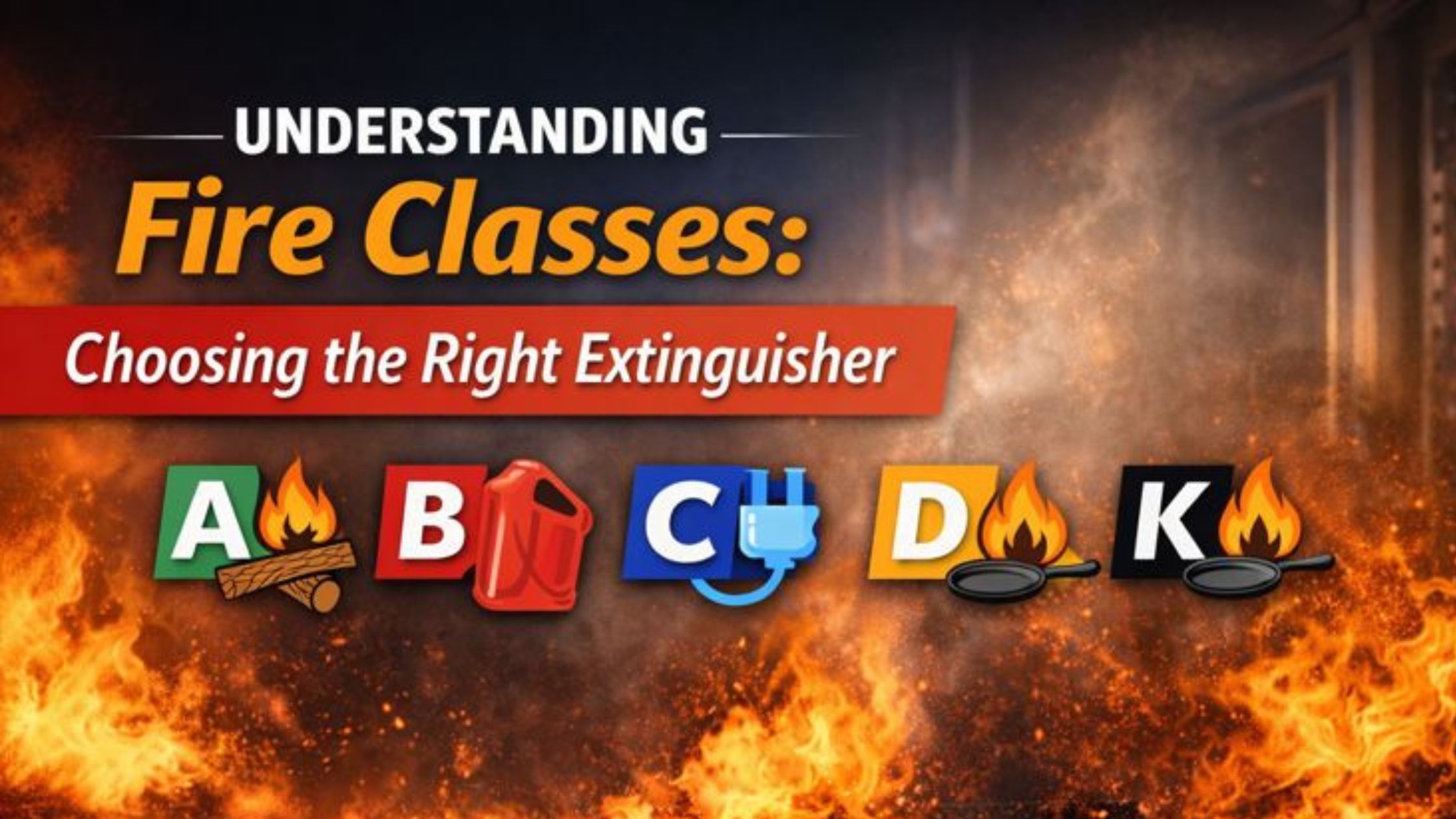
Understanding Fire Classes: Choosing the Right Extinguisher
Fire safety is not just about having a fire extinguisher—it’s about having the right fire extinguisher for the right type of fire. Many fire incidents escalate simply because an incorrect extinguisher is used, or no one understands which extinguisher works on which fire. This is where understanding fire classes becomes essential.
Different fires behave differently depending on the material involved. Electrical fires, cooking fires, fuel fires, and solid material fires all require specific firefighting approaches. In this blog, we explain fire classes in simple terms and guide you on how to choose the correct fire extinguisher for effective and safe fire control.
Why Fire Classes Matter?
Fire classes categorize fires based on the type of fuel involved. Each fire class reacts differently to extinguishing agents. Using the wrong extinguisher can be ineffective—or even dangerous.
For example, using water on an electrical fire can cause electric shock, while water on a flammable liquid fire can spread flames further. Understanding fire classes helps you act quickly and safely during emergencies.
Class A Fires – Solid Combustible Materials
Class A fires involve solid materials that burn easily and leave ash behind. These include:
-
Wood
-
Paper
-
Cloth
-
Rubber
-
Plastics
These fires are common in homes, offices, schools, and warehouses.
Best Extinguishers for Class A Fires
Water-based fire extinguishers, foam extinguishers, and ABC dry powder extinguishers are effective for Class A fires. They work by cooling the burning material and cutting off oxygen.
Class B Fires – Flammable Liquids
Class B fires involve flammable liquids such as:
-
Petrol
-
Diesel
-
Oil
-
Paint
-
Solvents
-
Alcohol
These fires are common in kitchens, garages, factories, and fuel storage areas.
Best Extinguishers for Class B Fires
Foam fire extinguishers, CO₂ extinguishers, and ABC dry chemical extinguishers are suitable. These extinguishers suppress flames by separating fuel from oxygen and stopping combustion.
Water should never be used on Class B fires, as it can spread the burning liquid.
Class C Fires – Electrical Fires
Class C fires are caused by live electrical equipment, including:
-
Electrical panels
-
Wiring
-
Switchboards
-
Appliances
-
Servers and IT equipment
Electrical fires are particularly dangerous due to the risk of electric shock.
Best Extinguishers for Class C Fires
CO₂ fire extinguishers and ABC dry powder extinguishers are ideal for Class C fires. These extinguishers do not conduct electricity and help suppress flames safely.
Water-based extinguishers must never be used on electrical fires.
Class D Fires – Combustible Metals
Class D fires involve combustible metals such as:
-
Magnesium
-
Sodium
-
Potassium
-
Aluminum powder
These fires are rare but extremely dangerous and typically occur in industrial and manufacturing environments.
Best Extinguishers for Class D Fires
Specialized Class D fire extinguishers are required. These extinguishers use dry powder agents specifically designed to absorb heat and suppress metal fires safely.
Using water or standard extinguishers on metal fires can cause violent reactions.
Class K Fires – Cooking Oils and Fats
Class K fires (also called Class F in some regions) involve cooking oils and fats, commonly found in:
-
Commercial kitchens
-
Restaurants
-
Hotels
-
Food processing units
These fires burn at very high temperatures and can reignite easily.
Best Extinguishers for Class K Fires
Wet chemical fire extinguishers are specifically designed for Class K fires. They cool the fire and create a soapy layer that prevents re-ignition.
Fire blankets are also effective for small kitchen fires, especially in homes.
Multi-Purpose ABC Fire Extinguishers
For environments where multiple fire risks exist, ABC fire extinguisher cylinders are widely recommended. These extinguishers are effective against:
-
Class A (solid materials)
-
Class B (flammable liquids)
-
Class C (electrical fires)
This makes ABC extinguishers suitable for homes, offices, shops, and small industries.
However, it’s important to note that while ABC extinguishers are versatile, they may not be suitable for Class D or Class K fires.
Choosing the Right Fire Extinguisher
When selecting a fire extinguisher, consider the following factors:
-
Type of fire risks present
-
Location and environment
-
Size of the area
-
Accessibility and ease of use
-
Compliance with safety standards
A proper fire risk assessment helps determine which fire extinguisher types are required and where they should be placed.
Placement and Visibility Matter
Even the right extinguisher is useless if it’s not accessible. Fire extinguishers should be:
-
Easily visible
-
Clearly labeled
-
Mounted at accessible heights
-
Located near high-risk areas
Regular inspection and maintenance are also essential to ensure readiness during emergencies.
The Role of Automatic Fire Protection
While manual fire extinguishers are critical, automatic fire protection solutions add an extra layer of safety. Devices such as automatic fire suppression systems and fire extinguisher balls help control fires when no one is present.
Combining manual extinguishers with automatic fire ball extinguisher solutions provides comprehensive protection and reduces dependency on human response alone.
Fire Safety Training and Awareness
Understanding fire classes should be part of basic fire safety awareness. While not everyone needs advanced training, knowing which extinguisher to use—and which not to use—can prevent panic and accidents.
Simple signage, instructions, and periodic awareness sessions significantly improve fire preparedness.
Fire Safety for Homes vs Industries
Fire risks differ between homes and industrial facilities. Homes usually face Class A, B, and K fires, while industries may encounter all fire classes, including Class D.
This is why industrial fire safety planning requires professional guidance, certified equipment, and strict compliance with safety norms.
Importance of Certified Fire Extinguisher Manufacturers
The effectiveness of a fire extinguisher depends heavily on its quality and reliability. Poor-quality or non-certified extinguishers may fail during emergencies.
Choosing a trusted manufacturer ensures:
-
Compliance with safety standards
-
Reliable performance
-
Durable construction
-
Proper extinguishing agents
Conclusion: Choose the Right Fire Extinguisher with a Trusted Manufacturer
Understanding fire classes is the foundation of effective fire safety. From Class A solid material fires to complex electrical and kitchen fires, each situation demands the correct firefighting approach. Using the right extinguisher not only controls fire faster but also protects lives and property.
When it comes to dependable fire safety equipment, Speciality Geochem stands out as a reliable fire extinguisher manufacturer in India. With a strong focus on quality, compliance, and innovation, Speciality Geochem offers AFS fire extinguishers designed to perform when it matters most.
Choosing the right fire extinguisher—backed by a trusted manufacturer—is not just a safety decision, it’s a responsibility.