
Table of Contents
ToggleA Small Fire Gives You About Ten Seconds to React
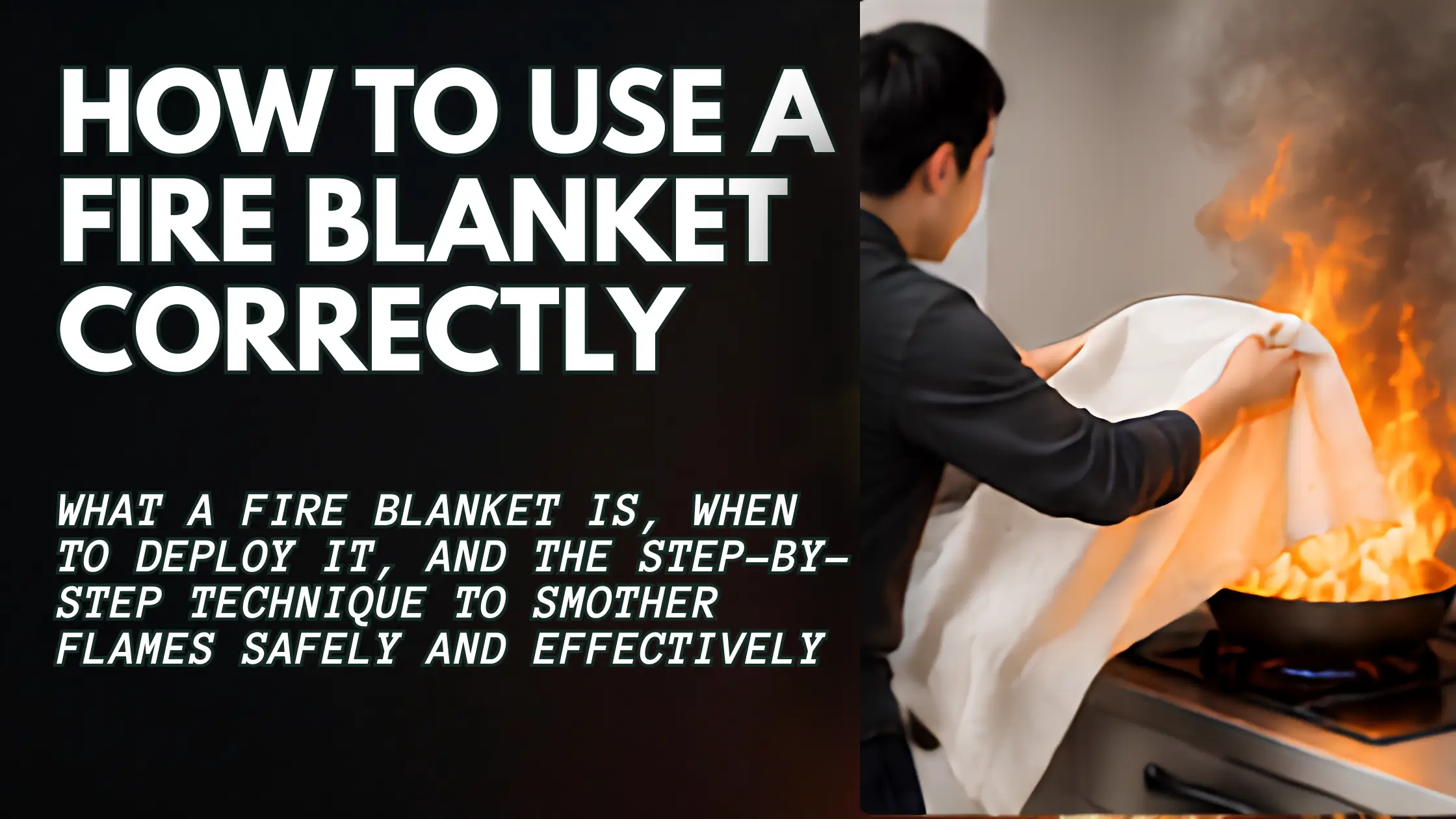
A grease pan flares up. A space heater catches a curtain. In both cases, you don’t have time to read a manual – you have time to act. That’s exactly why proper fire blanket use matters so much: it’s one of the few pieces of safety equipment designed to work in seconds, without training, water, or a mess to clean up afterward.
Yet most people who own a fire blanket have never actually practiced using one. They assume they’ll figure it out in the moment. That assumption is risky – thrown incorrectly, a fire blanket can fan flames instead of smothering them.
This guide walks through exactly how to use a fire blanket correctly, when it’s the right tool for the job, and the mistakes that turn a helpful safety device into a hazard.
What a Fire Blanket Actually Does
A fire blanket is a sheet of fire-resistant material – usually woven fiberglass or a silicone-coated fabric – built to cut off a fire’s oxygen supply. Fire needs three things to burn: heat, fuel, and oxygen. Remove any one, and the fire goes out. A blanket removes the oxygen by sealing the flames underneath it.
They’re most effective against:
- Cooking oil and grease fires (Class F) – the single most common home fire blankets are designed for
- Small electrical fires, such as an overloaded power strip or a malfunctioning appliance
- Early-stage flammable liquid fires (Class B), before they spread beyond a contained area
They are not a substitute for a fire extinguisher on a large or spreading fire, and they should never be used on a fire that’s already bigger than the blanket itself.
Step-by-Step: How to Use a Fire Blanket
Step 1: Assess the Fire Before You Move
Give yourself two seconds to check size and behavior. If the flames are taller than the pan, spreading across a surface, or producing heavy smoke, skip the blanket – evacuate and call emergency services instead. A fire blanket is built for containment, not for fires that are already out of control.
Step 2: Cut the Heat Source if It’s Safe To
If you can reach the stove dial, switch, or breaker without leaning over the flames, turn it off. This shortens how long the blanket needs to hold before the fire dies out completely. If reaching it means putting your hands or face near the fire, skip this step and go straight to the blanket.
Step 3: Release the Blanket and Protect Your Hands
Pull the tabs at the bottom of the storage case sharply downward to release the blanket. Hold it by the top two corners and fold the edges back over your hands and wrists – this keeps your skin shielded as you bring the blanket toward the fire.
Step 4: Place It – Never Throw It
This is the step most people get wrong. Approach the fire with your arms extended, blanket held like a shield in front of you, and lay it down gently starting from the edge nearest you and working inward. Never toss or throw the blanket from a distance. A thrown blanket can miss its mark, stir up flames, or leave a gap at the edges where oxygen keeps feeding the fire.
Step 5: Leave It in Place
Resist the urge to peek. Lifting the blanket to check on the fire lets oxygen back in, and it can flare right back up. Let it sit for at least 15 minutes — if it’s still warm to the touch through the fabric, give it more time before you go near it again.
Step 6: Confirm It’s Out, Then Call for Backup
After the blanket has cooled, carefully check that the fire is fully extinguished. Even if it looks out, it’s worth contacting your local fire department to confirm there’s no smoldering material underneath. If the fire didn’t go out or restarted, evacuate immediately rather than attempting a second pass.
Common Mistakes That Undo Correct Fire Blanket Use
- Storing it somewhere hard to reach. A blanket buried in a cupboard is a blanket you won’t use in time. Mount it near – but not directly above – the stove or highest-risk area.
- Using a household throw or towel instead. Only a certified, fire-rated blanket is designed to withstand the heat without igniting itself.
- Reusing a blanket after a fire. Most fire blankets are single-use; the material degrades once it’s been exposed to flame.
- Skipping practice. Even a dry run – removing the blanket from its case and holding it correctly – builds the muscle memory that matters when adrenaline is high.
If your workplace or kitchen doesn’t already have a properly rated blanket mounted within reach, AFS’s fire blanket is built to the standards this guide describes, with quick-release tabs designed for exactly this kind of split-second response.
Ready in Seconds, Not Minutes
Correct fire blanket use comes down to five things: assess, cut the power if safe, protect your hands, place – don’t throw, and hold it in place until the heat is gone. None of it requires special training, but all of it requires the right equipment within reach before you ever need it.
Have you got a fire blanket mounted in your kitchen or workplace right now? If not, that’s worth fixing today, not after an incident. Share this guide with someone who cooks, works around machinery, or manages a commercial kitchen – and drop a comment below if you’ve got a fire-safety question we didn’t cover.